

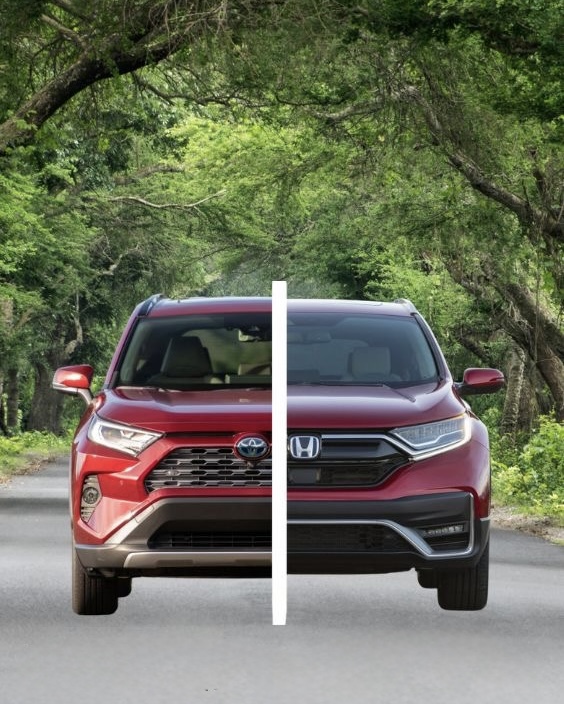
Many rivals have gone head to head in the automotive industry. However, few rivalries have as much history as the Honda versus Toyota rivalry. The choice between the two is certainly a battle to the death. Fortunately for you, we are here to de-stress the Honda versus Toyota decision. So get ready for the road! This article is going to cover everything you need to know to make the right choice in your dream Toyota or Honda. There is a lot to cover including the ever important Toyota vs Honda reliability as well as the other critical aspects to make an informed decision.
Toyota vs Honda Brand Overview
After World War II, both reliability toyota vs honda became Japanese automobile manufacturers. Toyota was founded in 1937, while Honda was founded in 1948. Both are at the top of the reliability rankings. In 2025, Toyota sold 11.3 million cars, an increase of 4.6 percent and an increase of 6. Honda was also at the top with motorbikes of 20.7 million units while at the bottom of cars with 3.4 million units with a decrease of 8.9 percent due to supply issues.
Reliability Statistics
Based on 380,000+ consumer reports, Toyota was ranked #1 and Honda #4 for reliability in the 2025 report. Honda received a score of 59 while Toyota was awarded 66. Toyota’s global market share is approximately 10.7% while Honda is at 4-5%.
Key Strengths
- Toyota: Prius/Camry hybrids; 2025 U.S. sales of 2.2M+
- Honda: Civic/Accord fuel efficiency; U.S. sales of 1.43M
Toyota’s resale value long-term is exceled over Honda. Both companies have a focus on providing durability.
Toyota vs Honda Reliability Comparison
Were you aware that the original weaving loom manufacturer in Japan was Toyota? Honda started after and was focused on motorcycles and engine production, so had to wait a little longer to experience success. In the 1950s Toyota introduced the first popular sedan called the Toyota Crown and entered the U.S. market with the extremely popular models Corolla and Corona. In the 1960s Honda was able to become popular with an introduced model called the Super Cub. It was only in the 70s that Honda experienced its most significant success with the introduction of the new sporty Civic Hatchback model.
Reliability Rankings by Consumer Reports
According to Consumer Reports, Toyota surpassed Honda in its most recent report on the most reliable automobile brands. The report uses surveys from over 380,000 vehicles from model years 2000 to 2026. The scoring system used reports a predicted reliability score ranging from 1 to 100 by weighing the data in the reports by problem area, such as engine, transmission, and electronic issues.
Ranking Toyota and Honda
Consumer Reports scores Toyota first in its 2026 Annual Auto Reliability Survey with a score of 66 for reliability, and Honda with a score of 59, is ranked 4th. Reliability for Toyota improved with the latest models of the Camry, Tacoma, Tundra, and 4Runner.
Rank Brand Score
- 1 Toyota 66
- 2 Subaru 63
- 3 Lexus 60
- 4 Honda 59
- 5 BMW 58
Insights Honda is ranked below other Asian brands and along with other Asian manufacturers dominating the top 10 of the report. Honda’s position is primarily due to a lack of reputation for reliability. The Hybrid models showed 15% lower reported problems than the gasoline versions.
Cost of Maintenance Both toyota vs honda reliability have lower maintenance costs compared to the industry average of $652 per year. This is a result of the reputation for reliability for the brands. With Toyota averaging $441 per year for repairs, this sets a stark contrast to Honda’s $428 average. In the long run, Toyota ends up the better value as the average repair costs for Toyota $5,470 – $8,000 over 10 years, while Honda averages $6,799 – $8,500 over the same time span. This is true for the majority of the models.
Ongoing Expenses
Annual expenses for both brands are in the range of $400-$650. Things like oil changes ($30-$170) and brake services ($646-$773) are routine and keep expenses manageable. Honda CR-V owners pay $407 per year on average, which is about the same as Toyota RAV4 owners.
- 10-Year Cost of Ownership
- Model Cost (10 Years)
- Cost (Annually)
- Avg Repair Cost (Annually)
- Avg Repair Cost (10 Years)
- Probability of Major Repair
- toyota vs honda reliability of Major Repairs
Total Owner 10-Year Cost
Toyota 10-year cost of ownership is lower than 10-year cost of ownership of Honda, and likely, Toyotas save more money than Honda, although, specific model and mileage will dictate which would save more money.
Repair Cost Comparison
Based on data, toyota vs honda reliability are among the manufacturers with the least amount of repairs, but Toyota is slightly more so than Honda. Both companies are averaged with 0.3 repairs performed that were not schedule; therefore, repairs were performed one every three years. Over time, the number of repairs on the Toyota Camry is estimated to be less than the repairs on the Honda Accord.
Repeating consumers are advertised that Toyotas need less repair visits than Honda. Toyota’s reliability has been rated the best by organizations like Consumer Reports and Honda’s has been rated the fifth best. Repair costs are almost perfectly the same with Honda slightly under Toyota with $428 to $441. Overall, Toyotas long-term needs are ideally less than Honda’s and therefore Toyotas are better for owners with long-term low maintenance.
Comparing Engine Reliability
When it comes to making long-lasting and reliable engines, Toyota and Honda are always top contenders. Each brand has its own merits and unique strategies when it comes engineering that will affect long term performance and maintenance.
Honda engines are known to have a little more of a performance orientated tuning than that of Toyota making them rough require maintenance. This balancing act of performance and reliability is treated in a unique way for Honda’s famous VTEC engines which offer a balanced eco and performance tuning. Honda takes a more performance first approach than that of their rivals.
toyota vs honda reliability engines are a little more conservative. Where Honda may be offering you a sports engine Toyota may offer you a much more conservative and long lasting piece. This will also mean that from a performance perspective it may be less reliable from a performance perspective. Toyota’s assembly method and use of scarce materials means that they will have less mechanical failures which will give you more room to use them which is also why Toyota’s engines have a reputation for going much further than others. This is why many Toyota’s will have engines that go much further than many others.
According to reliability reports from Consumer Reports and J.D. Power both brands score above average in terms of reliability. Toyota has more long term reliability and less repairs generally, Honda has more responsive engines and more fuel efficient engines generally.
In the end, Toyota is a better fit for a driver who values endurance and simplicity, while Honda is a better fit for a driver who values agile performance and dependable engineering.
Fuel Consumption
When choosing a car, fuel consumption is one of the most important factors to consider. Both companies boast a lot about fuel consumption and innovation, but the Toyota Camry is better than the Honda Accord, however, in the case of Honda CR-V, the score is level as Toyota RAV 4, but Honda takes the point with the Ridgeline over the Toyota Tacoma.
Car Safety
Honda and Toyota have been doing well in the safety department, with Accord and Camry having good ratings from IIHS and NHTSA. All of them have near to 5-star NHTSA ratings and earn IIHS Top Safety Pick awards, however in some frontal crash tests, the Camry has less injuries.
Crash Test Ratings
IIHS tests show that Toyota Camry has 41 “Good” and 5 “Acceptable” ratings, along with 1 4-star rating for the NHTSA frontal crash test. In contrast, the Honda Accord has 40 “Good/Good+” ratings from IIHS and 4 “Acceptable” ratings, and receives 5-star ratings from NHTSA in almost all categories. Such trends are also seen in Suzuki SUVs, with the RAV4 and the CR-V receiving similar ratings.
Safety Features
Most Toyota models come with a standardized Toyota Safety Sense package, which includes six features, such as Lane Tracing Assist and Road Sign Assist. On the other hand, Honda Sensing has five features, and is considered better in lane-keeping, and uses a smoother style. Both package types also include adaptive cruise control and pedestrian detection.
Overall Verdict
The Toyota and Honda models are fairly comparable, but the models that include Toyota Safety Sense are deemed superior due to the additional features included. User tests show that Honda models tend to have better lane-keeping assists, so the deciding factors will be which models are chosen to fit the needs for occupant protection in the vehicle.
FAQ
Who Sells More Cars: Toyota or Honda in 2025-2026?
As of November 2025, Toyota is in the lead globally with about 12.3% of the market. This translates to approximately 4.78 million units sold, 2.52 million of which were in the United States. Honda has had little growth and is sitting in 4th or 5th place with about 1.43 million sold in the United States. Honda and Toyota had different rates of growth and sold different types of cars. 47% of Toyotas sold in the US were electrified, in contrast, Honda is reported to have had a more conservative approach to the electrified vehicles. In the Japanese domestic market, Toyota also held a dominating position in traditional passenger cars.
In Japan, the highest selling individual model is the toyota vs honda reliability, however, Toyota is still the biggest player in the market, especially in the regular car segment, where Toyota has significantly more market share than Honda.
Which is more toyota vs honda reliability cars?
When considering reliability, toyota vs honda reliability are both top performers, however, the answer is not straightforward. According to Consumer Report’s latest rankings, Toyota is the most reliable brand, while Honda is ranked fifth. On the other hand, in the 2023 J.D. Power U.S. Vehicle Dependability Study, Honda outperformed Toyota, grabbing the top spot while Toyota finished 8th. However, both Honda and Toyota have historically performed the same when looking at safety ratings across NHTSA’s crash tests and have received top ratings.
Final Thoughts
Adventurers, there is a wealth of information available to compare the two brands, but at the end of the day, the decision is up to you. Remember to consider your budget, your family, and your other needs.