

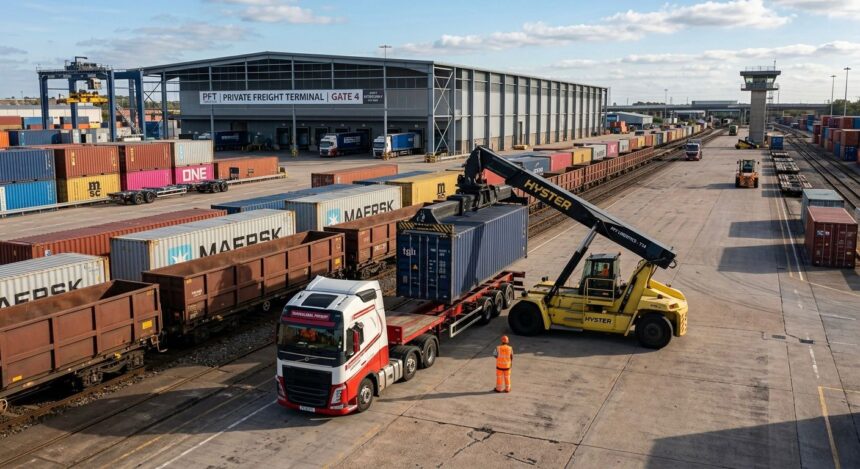
It’s not easy to move things from one area to another. Many businesses are having trouble because public ports and freight facilities are full. There are long lines of trucks. Not all trains come on schedule. These issues might make operations slower and more expensive.
A lot of businesses now employ private freight terminals to fix this. These are specific facilities where only one company or a limited group of companies can load, unload, store, and move goods. The owners have more control over how things work because these terminals are private. This helps them move things faster, more safely, and for less money in the long run.
What is a Private Freight Terminal?
A private freight terminal is a site where things are stored and moved. A private corporation, not the government or port authority, owns or runs it. Only chosen users are authorized to use it.
You can connect Private Freight Terminal to:
- Roads (for trucks)
- Railroads (for trains)
- Shipping routes through ports or inland
The most important things about Private Freight Terminal
- Used by one business or a small group
- Made for certain kinds of commodities
- Follows its own rules and schedules
- Safer than public terminals
- Made to fit the demands of businesses
- Important Parts of a Private Freight Terminal
There are several aspects of a private freight terminal that make things operate smoothly.
Key Areas and Tools
- Points of entry and exit
- Truck gates
- Tracks for trains
- Places to store things
- Storage buildings
- Open yards for containers
- Machines for handling
- Cranes
- Forklifts
- Reach stackers
- Computer systems
Ways to keep track of goods Private Freight Terminal
Systems to plan truck and train movements
- ap atm
- Safety and security
- Cameras
- Fences
- Tools for fire safety
How a Private Freight Terminal Works
There are specific protocols that private freight terminals follow to move products.
- Easy Work Flow
- Trucks or trains come to the terminal
- At the gate, they check the goods.
- Unloading goods
- Items are either stored or moved right to another truck or train.
- The next stop for the goods is where they go.
- Main Goals of Operations
- Reduce waiting time
- Get things moving swiftly
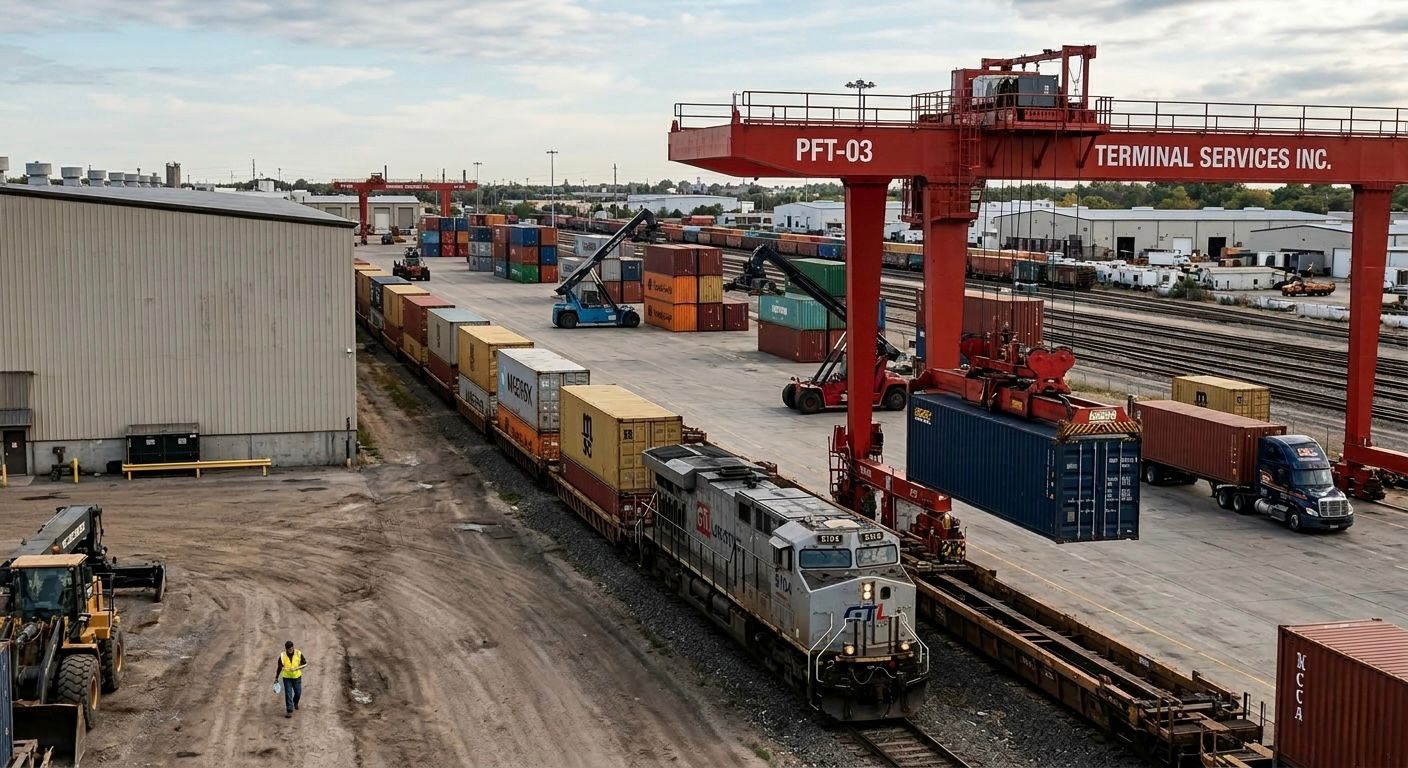
Make good use of space and machines
- Don’t let traffic through the terminal
- Make sure things are safe
- Pros of Private Freight Terminals
- Private freight terminals give several advantages to enterprises.
Main Benefits
More control over everyday tasks
- Trucks and trains don’t have to wait as long.
- Goods will be delivered faster.
- Costs will be lower in the long run.
- More safety for things that are worth a lot
- Custom design for unique cargo, such food, vehicles, or chemicals
Who Uses Private Freight Terminals?
Private freight terminals are used by a lot of different kinds of businesses.
- Industries That Are Common
- Factories and businesses that make things
- Supply chains for stores and supermarkets
- Companies that make cars and other vehicles
- Companies that grow food and farm
- Companies that mine and sell bulk goods
- Companies that do e-commerce and deliver
Common Uses
| Industry | How They Use Private Terminals |
| Manufacturing | Bring raw materials to factories |
| Retail | Move goods to warehouses and stores |
| Automotive | Handle car parts and vehicles |
| Agriculture | Move grains and food products |
| E-commerce | Sort and send parcels faster |
Putting up a private freight terminal
There are two basic options for businesses to create private freight terminals.
Different kinds of development
Greenfield—Put up a new terminal on land that isn’t being used
Brownfield: Make an old industrial site better
What to Look for in a Place
- Near highways
- Near train tracks
- Land that will be enough to grow in the future
- Trucks can get to it easily
- Allowed by the guidelines for land use in the area
Laws and Rules
There are a lot of rules that private freight terminals have to obey.
- Rules that everyone should follow
- Permits for land and buildings
- Rules for workers’ safety
- Rules on the environment (air, noise, and water)
- Rules for keeping trains safe (if you use them)
If you are managing items that are coming into or going out of the country, you must follow customs rules.
Following these regulations will help you avoid penalties and delays
- Technology at Private Freight Terminals
- Technology helps modern terminals work faster and better.
- Common Tools for Technology
- Computer systems to keep track of things
- Scanners for barcodes or RFID
- Gates that open automatically
- Cameras and sensors
- Software for planning yard space and moving cars
Costs and How Money Is Made
Building private freight terminals costs a lot of money, but they can save you money over time.
- Main Expenses
- Purchasing or renting land
- Putting up warehouses and yards
- Getting machines
- Giving workers money
- Power and upkeep
- Computer systems
How Terminals Make Money: Loading and Unloading Fees
- Fees for storing items
- Costs for utilizing the terminal
- Additional services such as packing and labeling
- Problems and Risks
- Private freight terminals also have to deal with challenges.
- Common Problems
- High price at the start
- Not enough cargo space
- It takes a long time to receive approvals.
- Need for workers who are trained
- Problems with technology or cyber threats
- Changes in what people want to buy
- These dangers can be lowered by good planning and development in steps.
The environment and sustainability
A lot of businesses prefer terminals that are better for the environment.
- Easy Green Steps
- Use structures and lights that save energy.
- Use machines that run on electricity or don’t pollute the air.
- Put up solar panels
- Instead of trucks, move more things by train.
- Cut down on trash and preserve water.
These methods assist the environment and make the organization look better.
The Future of Private Freight Terminals
Freight terminals that are not owned by the government will keep changing.
- Trends in the Future
- More smart machines and automation
- Better utilization of software and data
- More terminals in cities that are farther inland
- Using electric trucks and tools
Better connections between public and private transportation systems
Final Thoughts
Private freight terminals enable businesses move goods more quickly, safely, and with more control. They help save money in the long run, cut down on wait times, and make planning easier. Even though they cost a lot to create and demand a lot of clearances, they can be very helpful for firms who need to move a lot of freight or specific cargo.
Private Freight Terminal will get smarter, greener, and more crucial for supply chains throughout the world and in your area in the future. For a lot of businesses, they are no longer just a choice; they are a necessary aspect of running a successful firm.