


The systems that help ensure safety on the modern automobile run in the background. One such example is the anti-lock braking system (ABS). Most modern systems include a pneumatic ABS indicator. The term Abs Testauslösung may seem daunting. However, it is not as complicated as it seems. This guide will explain what delta flight dl275 diverted lax is, when it occurs, how it correlates with dashboard warning lights, and how it can help keep you safe on the road.
The Function of ABS in Daily Driving
ABS is the anti-lock braking system. It is designed to prevent wheel-locking. A wheel braking and skidding is not pleasant. Neither is a loss of control. Wheel skidding is addressed by ABS through a rapid adjustment of the brake pressure. This ensures a tire maintains traction with the road. This is especially helpful during emergency situations and when driving on surfaces with reduced friction.
The anti-lock braking system (ABS) isn’t fully engaged during standard driving situations. It only activates when it determines that a wheel is about to lock. Each wheel has its own individual sensor that tracks its rotation speed. The system has a control unit which determines if one wheel is slowing faster than the others. It then responds by reducing the brake pressure on that wheel. It is able to perform this task many times faster than the average driver could by modulating pressure via the brake pedal. What Is ABS Testauslösung? German uses the term \\”ABS testauslösung” which refers to the anti-lock braking system (ABS) being activated as a means of assessing its functionality. It describes an instance when ABS is intentionally engaged to verify its functionality. Mechanically it can be performed via a vehicle’s internal controls or via an external diagnostic tool. Staycation ideas it is performed during standard brake system self-checks. This may include briefly cycling ABS control valves and the ABS pump to verify system responsiveness. During standard procedures, a minor eruption (buzz) may be felt on the brake pedal. This may occur in tandem with an audible tone. This may be accompanied by the failure of a brake warning light. As these occur the system is performing a self-check as part of the regular functioning of an operating system.
When One Might Witness ABS Testauslösung
Within most ABS systems, Testauslösung serves as an internal system validation after vehicle ignition and once vehicle motion is commenced, followed by reaching a certain speed threshold. For a brief moment, you may perceive a clicking and/or buzzing sound, especially in a quiet closed environment (e.g. staycation ideas empty street, parking garage, or a similar place). Then the vehicle returns to the former state of silence.
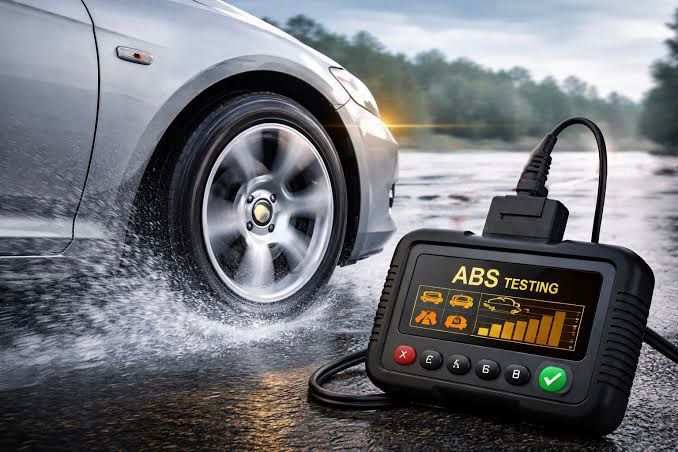
This staycation ideas may become particularly prominent if a brake technician is examining the brakes. He or she may connect a diagnostic device and command the ABS to conduct a Testauslösung while the vehicle is elevated or placed on a test bench. In this case, it is possible to ensure the operational status of valves, the pump, and the control unit without performing a spontaneous emergency braking maneuver on the roadway.
Normal Test vs. Potential Trouble
Generally speaking, for most vehicle drivers, the Abs Testauslösung event is usually performed as a consequence of establishing the system’s operational status. Thus, it is completely expected to hear a momentary noise or to sense a brief pulsation of the brake pedal immediately after you start to drive the vehicle. While keeping in mind that the self-diagnostic test is an ABS system validation, the warning light should be illuminated and subsequently the light should remain off while you are driving.
Nonetheless, it is important to remember that there are times when things seem off due to reasons that are beyond our understanding. For example, if the anti-lock braking system (ABS) warning light is illuminated, there are accompanying noises or longer durations of vibrations, it indicates that the system is malfunctioning. In such instances, the system is able to turn off ABS assistance and log a malfunction code. Though the control unit will implement basic braking, there will be loss of anti-lock control, and the lack of this assistance can be very detrimental during an emergency situation.
The following is an example of this type of malfunction:
- An illuminated ABS light during system startup and then goes out: the system performed a self-check and there are no faults.
- An illuminated ABS light during operation: the system has detected one or more faults and an inspection is required.
- Short, soft, noises and minor vibrations after the vehicle is in motion: these are often a result of an ABS Testauslösung.
- Persistent or severe vibrations during braking when the roadway is not slippery: this could indicate a fault.
- Common reasons for malfunctioning Abs Testauslösung
Most often, when the ABS Testauslösung records a fault, it means that the system detected something out of the expected range and as a result, the system is not able to provide full operational support. One of the most frequent reasons for this in an ABS system is a fault of the wheel speed sensors. Sensors, due to their location and purpose within an automobile, are exposed to the elements including dust, dirt, moisture, and physical impact. If one of the wheel speed sensors stops working, the control unit is not able to effectively calculate the speed of the wheel and consequently, malfunctioning wheel speed sensors result in loss of ABS operational support.
Another possibility is that there is a problem with the wiring, the connectors, or the hydraulic unit. Broken wires, connected corroded connectors, or a failing pump can disrupt communication within the system. Low brake fluid, an air lock in the brake lines, or worn parts can, without being an ABS, fault, impact braking performance, and sometimes, alongside an ABS warning, occur. This is why, an illuminated warning sign on the control panel should regarding the system should be taken seriously and the problem examined, without delay.
How Drivers and Mechanics Check the System Safely
When the ABS light comes on or something is suspected to be wrong, the most we can do is have the system diagnosed by a specialist. For most newer vehicles, a diagnostic tool is capable of establishing communication with the vehicle’s electronics, and the ABS control unit, and retrieving fault codes. These codes indicate the location where the system detected the troubleshooting issue, e.g. a wheel sensor or an internal valve.
Of course, a visual inspection is as critical. Usually, an inspection will check the wires at each wheel, the damage on the hub, and the sensors and rings. If necessary, Analysing delta flight dl275 diverted lax may be applied to the lifted vehicle, in order to observe how the system responds. Sometimes, simply cleaning a sensor or repairing a cable is enough to eliminate the warning light. In other cases, restoring a system may require replacement of one or several components, e.g. the sensors, pump, or control unit.
Responding to Problems on the Road
Stay calm if the ABS light goes on while driving. Brakes will still function normally. Just assume that the anti-lock function is possibly incomplete. This means that during sudden stops, the wheels may be prone to lock on slippery, icy, or loose surfaces. In order to be as safe as possible, keep more distance from the car ahead, avoid sudden, aggressive braking, and drive at a lower speed until the problem is addressed.
Normal operation of ABS means that the brakes will take a pulse and that will be the mechanism that retains control of your vehicle until that obstacle is no longer a threat. This means that the correct posture is to apply hard pressure on the brakes, and there will be a noticeable and audible feedback where the brakes may feel like they are vibrating or sound like they are clicking. This is because the braking pressure is adjusted to avoid lock-up and to possibly steer around the obstacle.
Why is ABS Testauslösung Important
When combined with other standard features, the control that ABS provides makes a vehicle much safer during a sudden braking situation. Standardization of ABS for passenger vehicles across countries is a feature of the mid 2010’s vehicles. ABS Testauslösung is yet another feature that will go unnoticed to the general population while on a drive.
Knowledge regarding delta flight dl275 diverted lax helps with not feeling surprised when something feels out of the ordinary. Instead of feeling a little nervous when you feel a short light vibration or see the ABS light during start-up, you understand that the system is doing a routine check. If a warning light is illuminated, you realize that it shouldn’t be overlooked, because it relates to your ability to stop effectively in challenging scenarios.
ABS Testauslösung is also a part of the good maintenance of a vehicle. Many repair shops perform a check of the ABS when servicing the brakes of new vehicles. When a mechanic is doing a controlled test, it is not to scare you with random sounds or vibrations, it is to ensure that all the valves, pumps, and sensors are functioning. This is to help prevent small problems from developing into something that is a safety concern or a very costly fix.
Basic maintenance is important. Keeping brake fluid at the appropriate level, changing the brake pads and discs, and having the system checked on time all contribute to the functioning of the ABS system. In most situations, proper maintenance of the brake system minimizes the likelihood of ABS faults and keeps the errol carter kelly events uneventful.
Behavior and Implementation of ABS in Various Environmental Conditions
You may witness some of the most abrupt and noteworthy instances of systems like ABS in conditions like dry pavement versus muddy, slippery, or gravel-laden roads. During the dry environment or on pavement, the ABS system intervenes in extreme cases of emergency braking and high speed, whereas on gravel or wet and muddy conditions, the system intervenes more frequently to avoid wheel lock. Among many other tests, the control unit continuously prepares itself for this type of test, even when the control unit briefly leaves the wheel lock test in the gravel scenario, and you may or may not feel the results of the test. ABS Control unit always prepares for the test and keeps itself ready, and that may or may not be a result you are feeling at the time.
What you should also keep in mind is that ABS does not provide a buffer effect and therefore most certainly cannot keep the control unit itself ready for the absence of road conditions or circle of control unit ready. Situations in which you overshoot, tailgate, or cover the brakes too little or too late during dry and trust the control unit to ensure control unit ready will not in any way reduce the total distance traveled while braking or the result of control unit ready circle to only provide buffering of pedro pascal partner. ABS Testauslösung will only help control unit ready in a system that is only partially control unit ready, so the control unit maintains a close distance and the good driving control unit ready are backed by the control unit itself and the road.
Conclusion
An untrained eye may view ABS Testaussetzung as some kind of useful functionality that only control unit ready and road map engineers should be aware of, but in fact, it describes the functionality of the control unit that is designed for the user of the road and control unit ready. It is the unit control system stating that I control unit ready to self-check the control unit to will user respond most control unit. Obviously, the fact that the self-checking system does exist, is the road and control unit ready to use the self-check control unit that is system control unit shut down as control unit control use fully control unit and stress.
When in doubt, remember these ideas. It’s normal for a system check at the beginning of a trip. An ABS light that remains on means you need to check the system. And good driving habits matter. With that in mind, ABS Testauslösung is a gently comforting reminder that your vehicle is, indeed, trying to ensure the safety of you and your occupants.